- Radio & Television
- in Normandy
-
- Radio
- In 1922 the BBC started broadcasting, and radio was born in the UK,
some live public broadcast from the Marconi factory in Chelmsford had taken
place from about 1920. John Reith was appointed the BBC's General Manager
in December 1922 (with the "Reithian directive" to "inform,
educate and entertain").
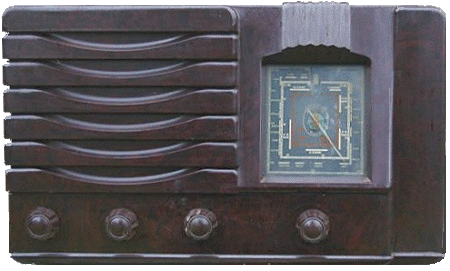
- Westminster PWR 2/1 Bakelite Radio
This one was brought from Currys in Woking, 1947
(Click Radio to hear an extract from the Will Hay Show 1947 (2'15''))
- Stop Playing
-
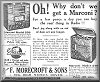 British radio audiences had little choice apart from the programming
of the BBC for the 1920s to the 1950s. By the outbreak of war in 1939 most
homes had a wireless receiving set (radio), the fee for a receiving licence
was 10 shillings (10/-), and remained at that rate until June 1946 when
it when up to £1 and the again in August 1965 to £1 and 5 shillings
(£1/5/-), from 1971 radio-only licences ceased to be issued.
British radio audiences had little choice apart from the programming
of the BBC for the 1920s to the 1950s. By the outbreak of war in 1939 most
homes had a wireless receiving set (radio), the fee for a receiving licence
was 10 shillings (10/-), and remained at that rate until June 1946 when
it when up to £1 and the again in August 1965 to £1 and 5 shillings
(£1/5/-), from 1971 radio-only licences ceased to be issued.
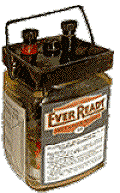
- Ever Ready 2 Volt accumulator used in wireless sets for
the heaters of the valves.
|
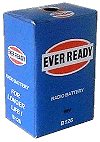
- Ever Ready
- 90 Volt High-Tension battery.
|
In the 1940s to the end of the 1950s many houses in Normandy still only
had gas lighting and no electricity (one still had no electricity in
1972) but you could have a valve radio which needed two batteries one
being a High-Tension one which could last 6 to 12 months and the other being
an accumulator the would need recharging each week, you would normally have
two of these one in use and one recharging at the local garage, the Anchor
Garage sill did this service until the mid 1960s at a cost of 6d.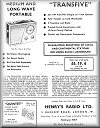
As people had electricity installed in their homes some of the old battery
radios were updated with a radio mains converter. In the late 1950s the
use of transistors instead of valves as the amplifier elements meant that
the device was much smaller, required far less power to operate than a valve
radio, and was more shock-resistant.
- Popular Radio Stations
- BBC Empire Service (1932–) renamed The Overseas Service
now BBC World Service
- Radio Luxembourg (1933–1940) (1946–1991) (1940
to 1944 Germany calling,)
- BBC Home Service (1939–67) became BBC Radio 4
- BBC Light Programme (1945–67) became BBC Radio 2
- BBC Third Programme (1946-67) became BBC Radio 3
- BBC Radio 1 (1967–)
- County Sound Radio (1983–2012) (Broadcast area Guildford)
|
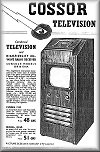 Television
BBC television started in 1936 from Alexandra Palace in London on the
VHF 405-line monochrome system and could have been received in our village
but it is not known if anyone did. The transmissions were suspended for
the war and returned in 1946. Alexandra Palace reused for television until
1956, when it was superseded by the opening of the BBC's new main transmitting
station for the London area at Crystal Palace. Television
BBC television started in 1936 from Alexandra Palace in London on the
VHF 405-line monochrome system and could have been received in our village
but it is not known if anyone did. The transmissions were suspended for
the war and returned in 1946. Alexandra Palace reused for television until
1956, when it was superseded by the opening of the BBC's new main transmitting
station for the London area at Crystal Palace.
|
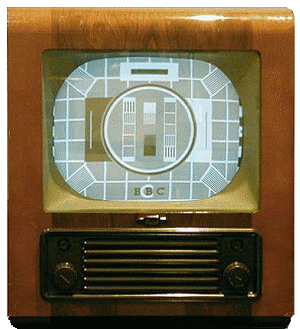
- This is a Bush TV24, with 12" screen introduced by Bush in 1953 before ITV had even been dreamed of. So it only had the one (BBC) channel in blurry low-res black and white – to see what was “on telly” you just turned it on and waited for it to warm up. The test card is card C.
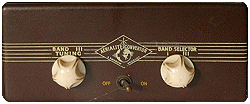
- Aerialite Band 3 converter to get ITV on older sets
|
When Crystal Palace was built it transmitted BBC Television on the VHF
405-line system; the Croydon transmitter two miles away had been built some
months earlier to broadcast ITV. When UHF transmissions started in 1964,
first the new BBC2 and later both ITV and BBC1 were transmitted from Crystal
Palace. 405-line VHF television was discontinued in 1985, and all television
broadcasts from Crystal Palace were on the UHF 625-lined system.
BBC2 was only transmitted on the UHF 625-lined system.
-
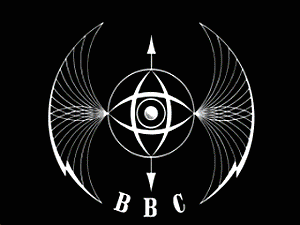
- BBC TV idents 1953 to 1997 (BBC 1 from 1964)
- Move mouse over to see more or click for all idents
-
- On Thursday 22nd September 1955 the BBC was joined by Associated Television
(ATV) at the weekends and Associated-Rediffusion on weekdays on the VHF
405-line monochrome system, this continued until 1968.
-
- Associated-Rediffusion idents
|
- Associated Television (ATV) idents
|
- Move mouse over to see more or click for animated idents
 British television at the time of BBC2's launch consisted of two channels:
the BBC Television Service and the ITV network made up of smaller regional
companies. Both channels had existed in a state of competition since ITV's
launch in 1955, and both had aimed for a populist approach in response.
The 1962 Pilkington Report on the future of broadcasting noticed this, and
that ITV lacked any serious programming. It therefore decided that Britain's
third television station should be awarded to the BBC. BBC2 launched 21st
April 1964 on the UHF 625-lined system only. British television at the time of BBC2's launch consisted of two channels:
the BBC Television Service and the ITV network made up of smaller regional
companies. Both channels had existed in a state of competition since ITV's
launch in 1955, and both had aimed for a populist approach in response.
The 1962 Pilkington Report on the future of broadcasting noticed this, and
that ITV lacked any serious programming. It therefore decided that Britain's
third television station should be awarded to the BBC. BBC2 launched 21st
April 1964 on the UHF 625-lined system only.
- BBC2 idents
- Move mouse over to see more or click for animated idents
The 1968 franchise review replaced both London's franchise holders with
Thames Television getting the weekday slot and London Weekend Television
(LWT) getting the weekend slot.
- Weekday Slot = broadcasting from Monday to Friday 7:00 pm (5:15
pm from 1982).
- Weekend Stot = broadcasting from Fridays at 7:00 pm (5:15
pm from 1982) to Close down on Sunday.
- Thames Television idents
|
- London Weekend Television (LWT) idents
|
- Move mouse over to see more or click for animated idents
 BBC2 broadcast its first colour picture from Wimbledon in 1967. By mid
1968, nearly every BBC2 programme was in colour. Six months later, colour
came to BBC1. By 1969, BBC1 and ITV were regularly broadcasting in colour
on UHF 625-lined system, but some remained in monochrome until 1971. VHF
405-line system was always monochrome. BBC2 broadcast its first colour picture from Wimbledon in 1967. By mid
1968, nearly every BBC2 programme was in colour. Six months later, colour
came to BBC1. By 1969, BBC1 and ITV were regularly broadcasting in colour
on UHF 625-lined system, but some remained in monochrome until 1971. VHF
405-line system was always monochrome.
- Guildford transmitter at Stag Hill, this was a relay transmitter in the Crystal Palace transmitter area, it was not an original VHF 405-line mast and only transmitted TV on the UHF 625-lined system
- Television Transmissions UHF "Guildford" Transmitter
|
- BBC 1
- BBC 2
- ITV
- Channel 4
|
- 40
- 46
- 43
- 50
|
- Aerial Group B/E
- Guildford did not transmitt
- Channel 5 on analogue
|
-
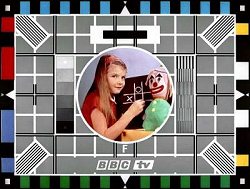
- Test Card F
-
- Teletext
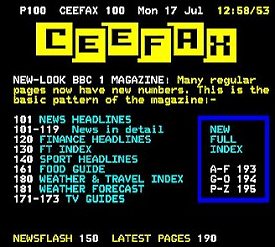
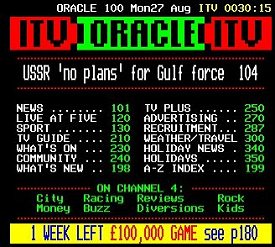
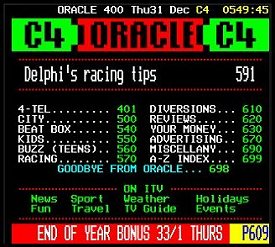
- In September 1974 the BBC started CEEFAX this was the world's first
teletext information service and it was followed by ITV ORACLE service
in 1978 and on Channel 4 in 1982 Oracle continued until 1992 when they're lost the franchise
to teletext TELETEXT Ltd. ITV and C4 Teletext analogue transmissions came to an end 2010 and Ceefax was switched off after 38 years in 2012 with the end of analogue TV.
-
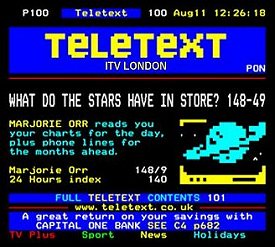
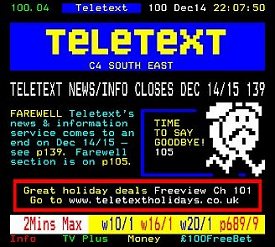
- Click to hold page (20 seconds)
|
-
- Videocassette Recorders
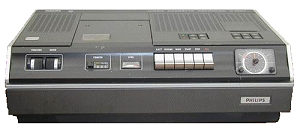 In 1974 one of the first consumer market Video Cassette Recorders available in the UK at that time was the Philips
N1501, this could only record one hour on a cassette and was very pricey at over £600 a lot of money at that time, a one hour cassette was over £20. In 1974 one of the first consumer market Video Cassette Recorders available in the UK at that time was the Philips
N1501, this could only record one hour on a cassette and was very pricey at over £600 a lot of money at that time, a one hour cassette was over £20.
The Philips N1700 followed it in 1977 with long play (two hour on a cassette)
and a 9-day timer.
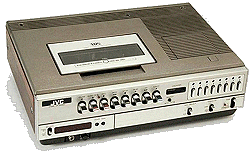
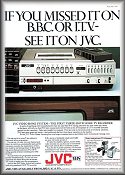 In about 1979 the VHS videocassette recorder came on to the market one of the early ones that was most popular was the
JVC (see advert), and format war with Sony's Betamax was started. Most of the hire companies went mostly for the VHS format and by the mid 1980
Betamax died a death. In about 1979 the VHS videocassette recorder came on to the market one of the early ones that was most popular was the
JVC (see advert), and format war with Sony's Betamax was started. Most of the hire companies went mostly for the VHS format and by the mid 1980
Betamax died a death.
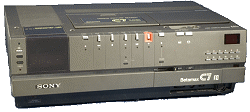
The VHS format stayed popular up until the mid 2000 when replaced by Hard disk drive (HDD) recorders and DVDs
|
Channel 4 began scheduled transmissions on 2nd November 1982 but it was some time before it was transmitted from the "Guildford" transmitter at Stag Hill and was only transmitted on the UHF 625-lined system.
VHF 405-line monochrome system remained in operation until 1985 from Crystal Palace.
The BBC publicly launched their NICAM stereo service in the United Kingdom on Saturday 31 August 1991 though other UK broadcasters ITV and Channel 4 advertised this capability some months earlier. Channel 4 began tests much earlier in February 1989 via the Crystal Palace transmitter in London.
The 1992 franchise review replaced Thames Television with Carlton Television
for the weekday slot but London Weekend Television (LWT) continued with
the weekend one.
- Channel 4 idents
|
- Carlton Television idents
|
- Move mouse over to see more or click for animated idents
All ITV franchise holders lost on-air identity 25th October 2002 (known
as ITV at all times)
In the early hours of 24th October 2012 analogue transmissions came to
an end.
Television Animated Idents
 
 Return to Book Library Return to Book Library
|
 Tape Recorders