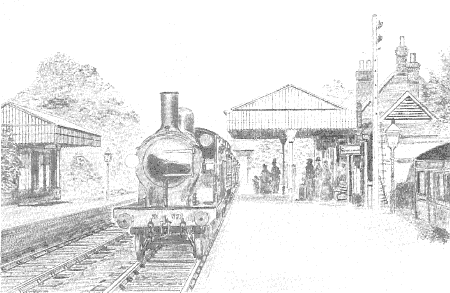
| THE STORY OF WANBOROUGH STATION
The railway line which runs through Normandy
was opened between Guildford and Ash Junction on 20th August 1849 but another
forty years and more were to elapse before Wanborough Station itself was
built. The railway line then formed part of the London & South Western
Railway (LSWR). At Ash Junction it was joined by the line from Reading operated
by the South Eastern Railway (SER), the section of which from Farnborough,
was opened on the same day. The SER trains continued from Ash Junction to
Guildford by agreement over the tracks of the LSWR. The LSWR route was extended
to Farnham on 8th October 1849 with stations at Ash Green and later Tongham.
Wanborough Station owes its existence to the
efforts of Sir Algernon West, then the tenant at Wanborough Manor He was
a close friend of Mr W E Gladstone and also served as his private secretary
when he was Prime Minister. Mr Gladstone and his political colleagues often
met at the Manor where he himself frequently stayed, and Sir Algernon thought
that travelling by rail to a station here would be more convenient for his
visitors than continuing to negotiate the steep hill of the Hogs Back from
Guildford with coach and horses.
Part of the land for the site belonged to the
Wanborough Estate and was given by the McKibbin family, owners of the Manor.
One thousand pounds was also collected by local subscription. A condition
of the grant of land was that the station, though situated in Normandy,
should always be known as "Wanborough" but there was a period
in its history when local residents were successful in having "for
Normandy" added to the name. Unfortunately two men were killed during
the construction of the station.
When the station was opened on 1st September
1891, The Surrey Advertiser of the day described it as "a handsome
and commodious structure". Although control of the railway line and
the station has changed many times since then the appearance of the station
itself has changed very little since its opening day. There used to be a
canopy over the front entrance and a signal box at the far end of the up
platform, both of which have now gone, whilst the addition of the passenger
bridge came just before the line was electrified.
There are still many residents in the village
who remember being taken to the station as children to see the first electric
train going through on 1st January 1939. There are many more who remember
the train loads of hungry and battle weary troops after the evacuation of
Dunkirk, being moved in and out of the sidings while the local housewives
plied them with tea, sandwiches and pies. One soldier asked a young girl,
"Where are we?" When told, "Normandy", he exclaimed
that that was where they had just come from!
For many years the station was a flourishing
and busy concern and at one time had a staff of at least five. It handled,
not only passengers, but also the community's commercial, agricultural and
horticultural products including the strawberries. A siding used to run
into the western end of the station yard for the use of the businesses operating
from there. For sixty years a siding also connected the neighbouring Wanborough
Brick Works to the railway line and trains were regularly shunted from the
station so that the bricks could be loaded for transportation. The flowerbeds
on the platform were a delight to the eye up until the early 1980s and several
times the station won the "Best Kept Stations Competition".
The Station Master's house and station building
have been sympathetically renovated by McShane construction and are now
used as offices by the company. The occasional excursion steam locomotive,
when routed through the station, is a very welcome sight and draws many
enthusiasts to the road bridge overlooking the line. |