
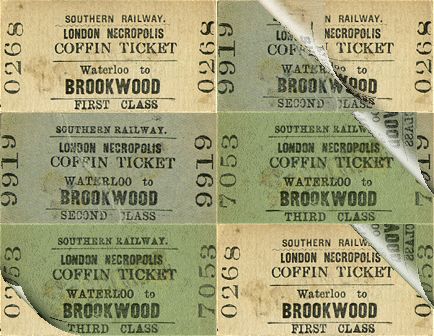
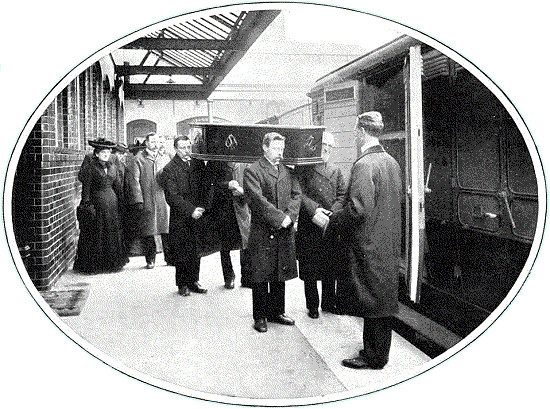
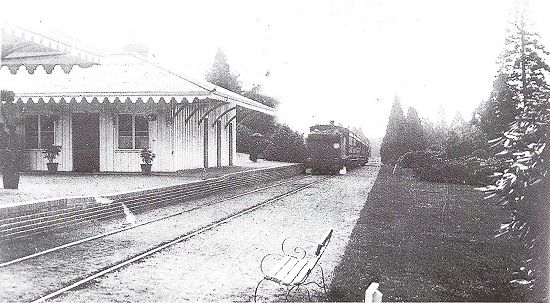
By the mid-nineteenth century the volume of London's dead was causing considerable public concern. In 1850, the idea of a great metropolitan cemetery, situated in the suburbs and large enough to contain all of London's dead for ever, was promoted. In 1850 an interested group formed the London Necropolis & National Mausoleum Company, established by Act of Parliament in June 1852. 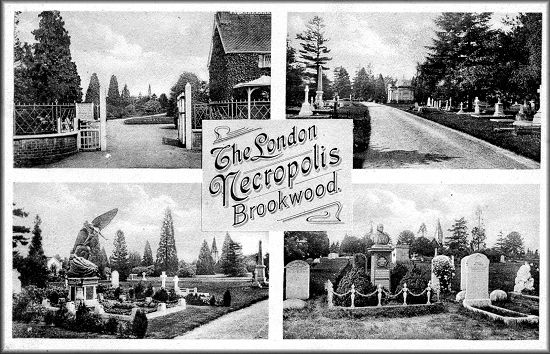 2,000 acres of Woking's common land was purchased from Lord Onslow. Some 500 acres were initially planted out for the Cemetery at the western end of this estate. As Brookwood could be reached cheaply and conveniently only by railway, the London & South Western Railway was engaged to convey coffins and mourners from a private station adjacent to Waterloo down into the Cemetery. At Brookwood there were two stations, one for the Nonconformist sections, the other for the Anglican areas. Brookwood Cemetery was consecrated by the Bishop of Winchester on 7th November 1854 and opened to the public on 13th November. Since 1854, some 235,000 people have been buried there. 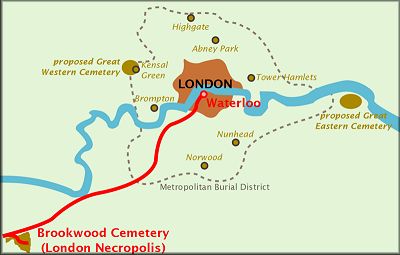
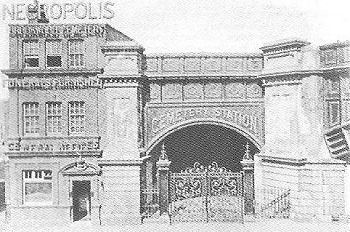
A private Necropolis terminus was provided just outside Waterloo station, the original station (1854-1902) was located between York Street (now Leake Street) and the Westminster Bridge Road. This station was replaced by a more extensive building in 1902. This was due to the complete reconstruction of Waterloo Station. The original terminus was demolished at about this time.
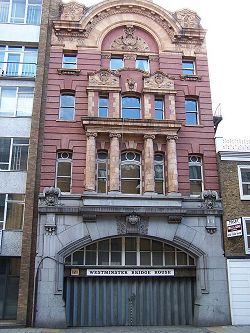
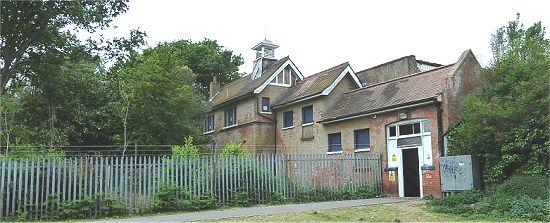
On 16th April 1941 the station at Waterloo was heavily damaged in an air raid. Much of the building was destroyed and the tracks to the station were rendered unusable. Although some funeral trains continued to run from nearby Waterloo station, the London terminus was never used again. Following the end of the war the London Necropolis Company decided that reopening the London Necropolis Railway was not financially worthwhile, and the surviving part of the station building was sold as office space. This remnant remains intact, and relatively unaltered since its opening.
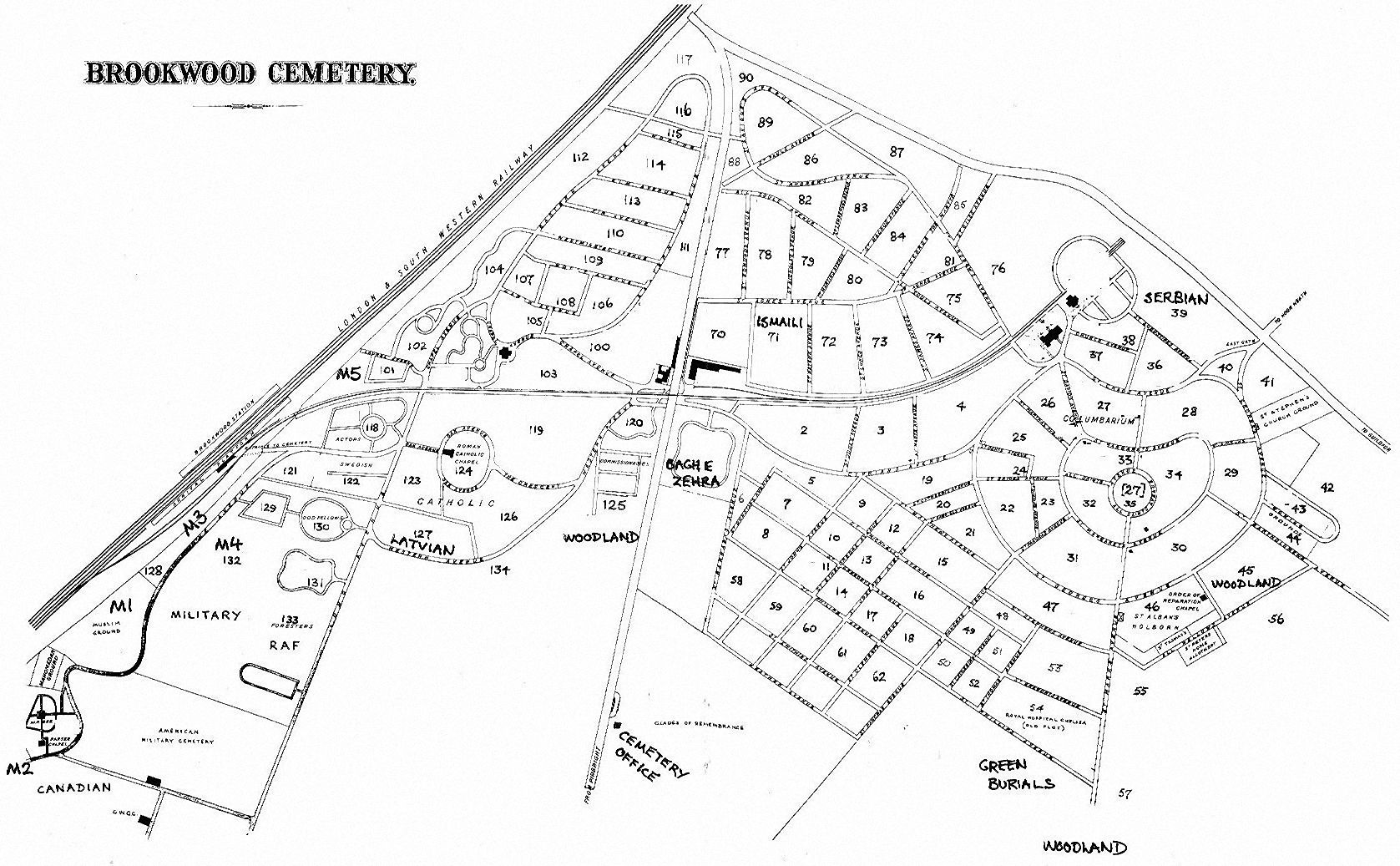
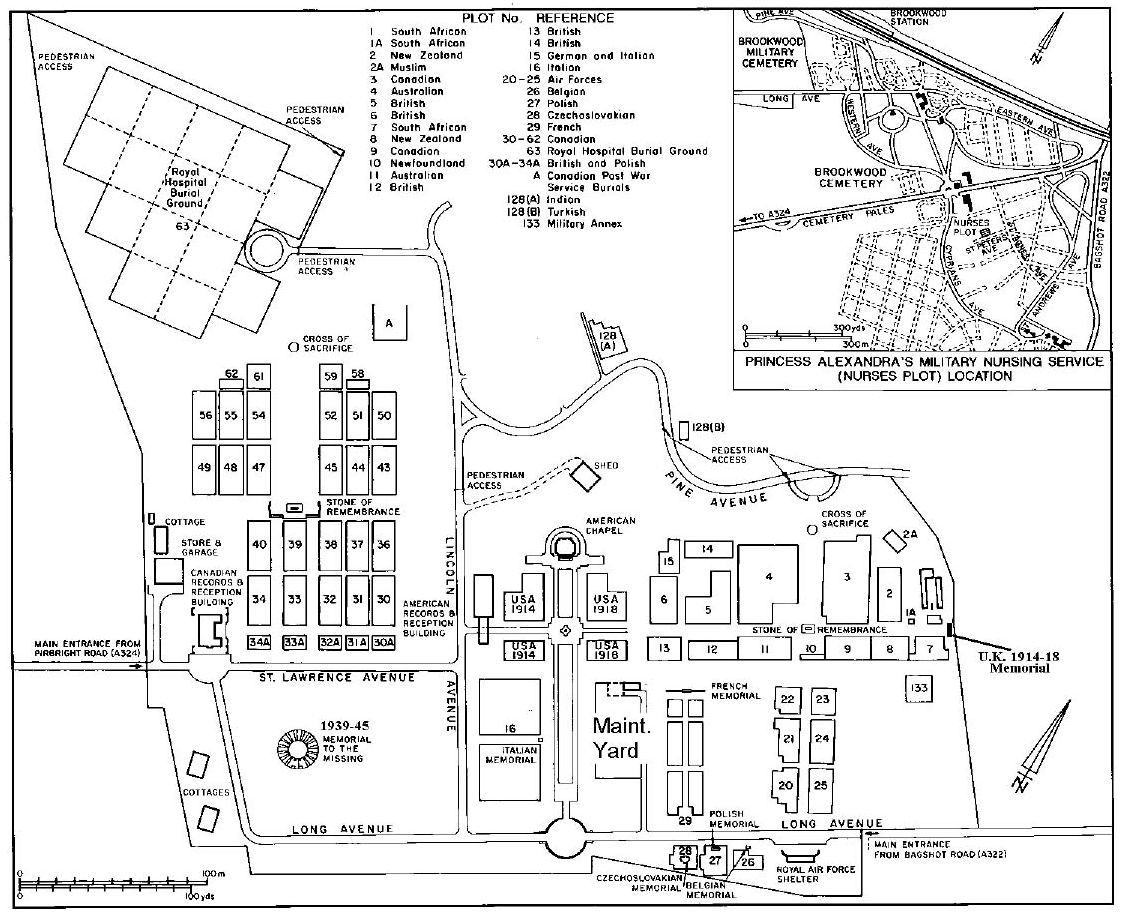
Brookwood Military Cemetery and Memorials Brookwood Military Cemetery covers about 37 acres (15 ha) and is the largest Commonwealth war cemetery in the United Kingdom. The land was set aside during World War I to provide a burial site for men and women of Commonwealth and American armed forces who died in the United Kingdom of wounds. It now contains 1,601 Commonwealth burials from World War I and 3,476 from World War II (the latter including 3 unidentified British and 2 unidentified Canadian airmen). Within this, there is a particularly large Canadian section, which includes 43 men who died of wounds following the Dieppe Raid in August 1942. Two dozen Muslim dead were transferred here in 1968 from the Muslim Burial Ground, Horsell Common. The cemetery also has 786 non-Commonwealth war graves, including 28 unidentified French. It also contains Polish, Czech, Belgian and Italian sections.
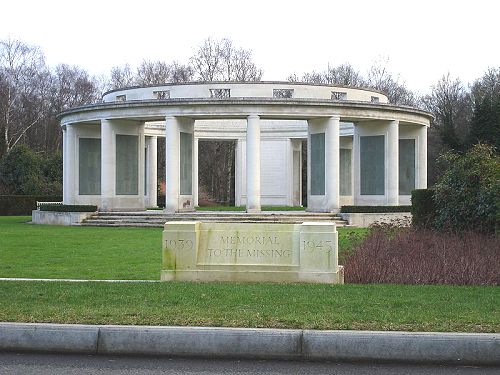
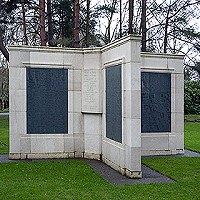
The United Kingdom 1914-1918 Memorial stands at the north-eastern end of the 1914-1918 Plot. Created in 2004, it currently commemorates 320 Commonwealth service personnel who died in the First World War in the United Kingdom but have no known grave. (Those whose graves are subsequently discovered become commemorated under the respective cemetery.) The Brookwood Memorial stands at the southern end of the Canadian section of the cemetery and commemorates 3,500 Commonwealth men and women who died during the Second World War and have no known grave. This includes commandos killed in the Dieppe and St Nazaire Raids; and Special Operations Executive personnel who died in occupied Europe. The Brookwood Memorial honours 199 Canadian servicemen and women. The memorial was placed within a military cemetery near the theatre of operations.
Brookwood American Cemetery and Memorial This 4.5-acre (1.8 ha) site lies to the west of the civilian cemetery. It contains the graves of 468 American military dead and a further 563 with no known grave are commemorated. It is administered by the American Battle Monuments Commission.
| ||||||||||||
 List of Notable Graves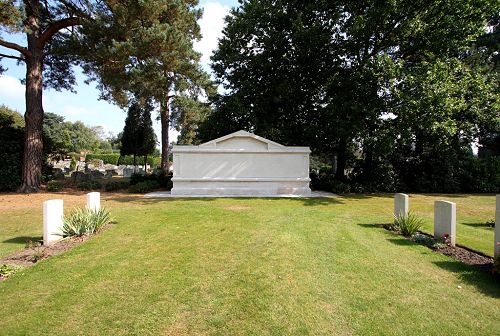
 Link
CWGC
Link
CWGC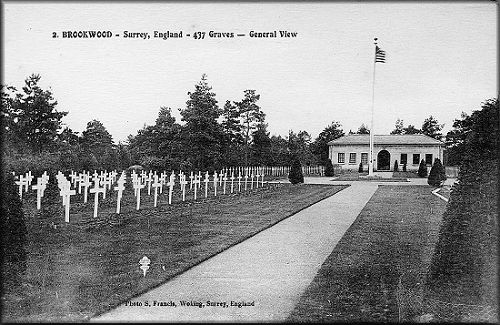


 Return to Book Library